
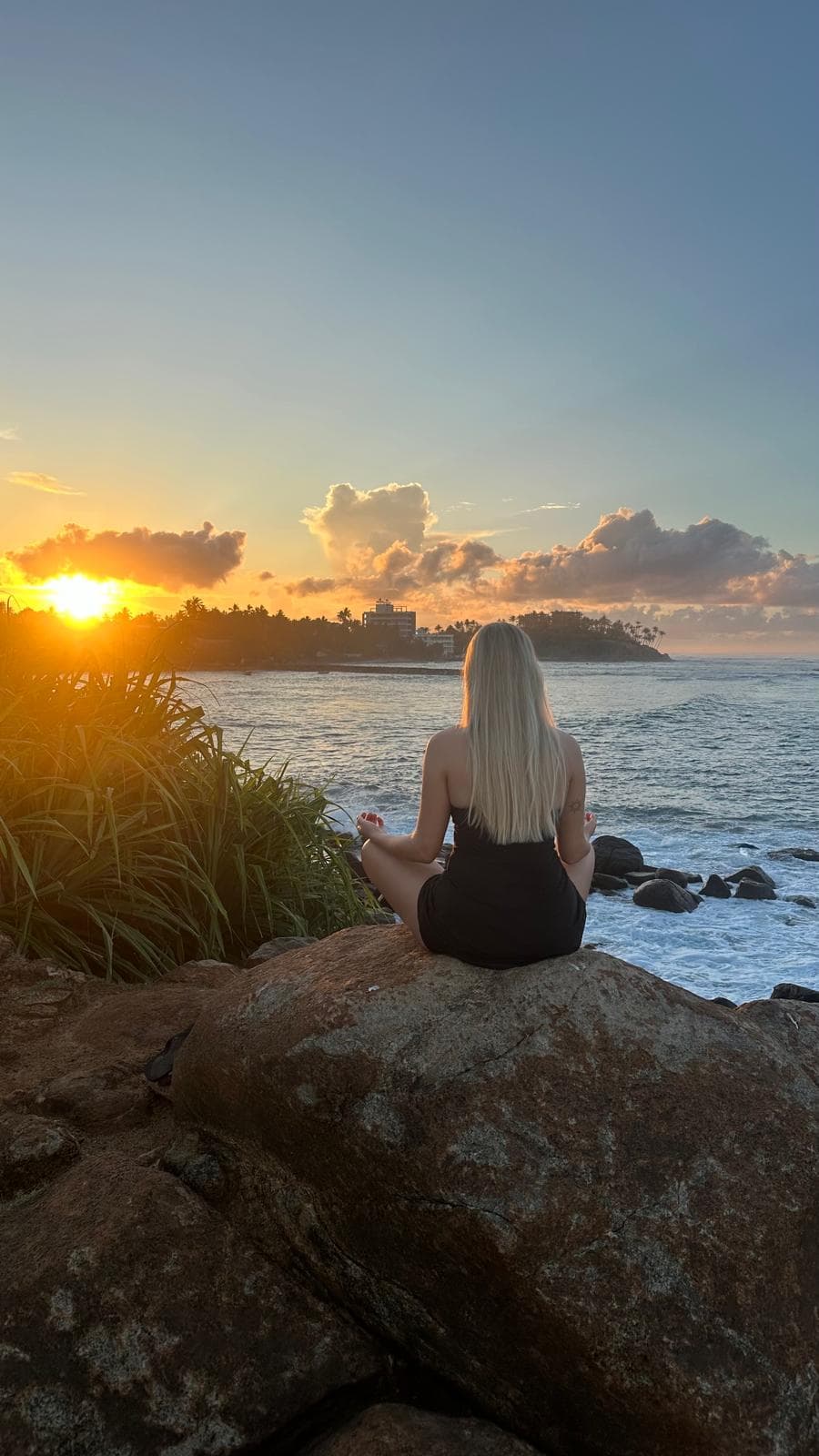
I've always been fascinated by the idea that we are part of something much bigger than ourselves.
The more I learn about holistic wellbeing, energy and the natural world, the more I find myself coming back to one thing: the Moon.
I see this as a beautiful framework for checking in with myself — a reminder that life isn't supposed to be one constant state of doing, achieving and pushing forwards.
There are times for growth. Times for action. Times for reflection. And times for letting go.
The Moon reflects that beautifully.
Why does the Moon fascinate me so much?
The Moon has been observed, followed and given meaning by cultures around the world for thousands of years.
For me, it brings a sense of perspective. It reminds me that I'm part of nature rather than separate from it. And that is something I'm becoming increasingly interested in through my own holistic journey.
Understanding the lunar cycle
The Moon takes approximately 29.5 days to complete one cycle from New Moon to New Moon. During this time, we see different amounts of the Moon's illuminated surface from Earth.
The four main phases are:
- 🌑 New Moon
- 🌓 First Quarter
- 🌕 Full Moon
- 🌗 Third Quarter
Between these major phases, the Moon gradually waxes — becoming more illuminated — and then wanes — becoming less illuminated. For me, these phases provide a natural rhythm that I can use to reflect on what's happening in my own life.
🌑 New Moon: planting the seed
The New Moon is the beginning of the lunar cycle.
It's when the Moon is positioned between the Earth and Sun, meaning the side illuminated by the Sun is facing away from us and the Moon is barely visible in the night sky.
Energetically and spiritually, the New Moon is often associated with new beginnings, intentions and planting seeds. This is one of my favourite times to pause and ask myself:
What do I want to create?
Rather than setting a huge list of goals, I like thinking about how I actually want to feel and what I want to make more space for.
Maybe it's more creativity. More rest. More confidence. More connection. Or simply more time for myself.
I find that setting an intention feels very different to putting pressure on myself to achieve something.
🌓 Waxing Moon: taking action
As the Moon begins to become more visible, it enters its waxing phase.
Traditionally, this period is associated with growth, building and taking action. This is where I like to take the intentions I've set and start putting some energy behind them.
It's a reminder that intentions are lovely, but they also need action. If I've decided I want to prioritise my wellbeing, what am I actually going to do about it? If I want to grow something in my life, where can I put my energy?
The waxing Moon reminds me to move forwards — but not necessarily to rush.
🌕 Full Moon: illumination & awareness
The Full Moon is perhaps the phase most people associate with lunar energy.
Scientifically, a Full Moon occurs when the Moon is positioned approximately opposite the Sun from Earth's perspective, allowing us to see the Moon's fully illuminated side.
Spiritually, Full Moons have traditionally been associated with illumination, awareness, completion and release. This is a time when I like to reflect.
What's been happening in my life? What have I learned? What has become clearer? What am I proud of? And perhaps most importantly:
What am I ready to let go of?
I don't see "letting go" as necessarily meaning walking away from something dramatic.
Sometimes it's letting go of an old thought pattern. An expectation. A habit. A version of yourself that you've outgrown. Or simply something you've been carrying that you don't need to carry anymore.
🌗 Waning Moon: slowing down
After the Full Moon, the illuminated part of the Moon begins to decrease. This is the waning phase. And this is where I think the lunar cycle has an especially important message for modern life.
We're constantly encouraged to do more. Work harder. Be more productive. Achieve more. Improve ourselves.
But nature doesn't work like that. The Moon doesn't stay full. Trees don't stay in bloom. The seasons change. And we aren't designed to be operating at maximum capacity all of the time either.
I see the waning Moon as an invitation to slow down, reflect and create space. It's a reminder that rest isn't the opposite of growth. Rest is part of the cycle.
🌑 Then we begin again
Eventually, the Moon reaches another New Moon and the cycle starts again.
And I love that. Because it means you get another opportunity to begin. You don't have to get everything right in one cycle. You can reflect on what worked. Learn from what didn't. Release what no longer feels right. And start again.
This is one of the reasons I find living with the lunar cycle so grounding. It gives me permission to see life as something that moves in cycles rather than in a straight line.
Why I'm learning so much about the Moon right now
The more I learn about Reiki, energy and holistic wellbeing, the more curious I become about the wider traditions and practices surrounding them.
I'm still learning. And that's something I actually really value. I don't want to present myself as someone who knows everything. The world of energy work, spirituality and holistic wellbeing is huge, and there is always another tradition, concept or perspective to explore.
At the moment, the lunar cycle is something I'm particularly drawn to. I'm learning about the different phases, the symbolism associated with them, how different cultures have worked with lunar cycles and how I can incorporate some of these practices into my own life.
And the more I learn, the more I realise that living with the Moon isn't about following a set of rules. It's about becoming more aware.
How I personally work with the Moon
I don't have a strict ritual that I have to follow every single month. Instead, I use the different phases as gentle reminders.
Around the New Moon, I might journal about what I want to create or invite into my life. During the waxing Moon, I might focus more on taking action. Around the Full Moon, I like to reflect on what has become clear and what I'm ready to release. During the waning Moon, I try to give myself more permission to slow down and turn inward.
Sometimes that might involve journaling. Sometimes meditation. Sometimes pulling an oracle card. Sometimes getting outside and actually looking at the Moon. And sometimes it's simply knowing what phase we're in and allowing that awareness to influence how I approach my week.
October's Full Moon
As I'm writing this, we're approaching the Full Moon on 26 October 2026.
For me, this makes the end of October a lovely opportunity to pause and reflect before moving into the next cycle. Instead of asking yourself what you need to achieve next, try asking:
What am I ready to release?
What has been taking up space in your mind? What are you holding onto because you're afraid of what comes next? What no longer feels aligned with who you're becoming? And what would you like to create space for?
You don't need to have all the answers. Sometimes simply asking the question is enough.
You don't have to be spiritual to work with the Moon
This is probably the most important thing I'd say.
You don't have to identify as spiritual. You don't need to believe in energy healing. You don't need crystals, candles, rituals or a collection of moon journals.
You can simply use the Moon as a reminder to slow down and check in with yourself. For me, that's what holistic wellbeing is ultimately about. It's not about doing everything perfectly. It's about becoming more aware of yourself — your body, your emotions, your energy, your needs and the way you move through the world.
And if the Moon gives me a reason to pause and reconnect with all of that, then I think that's pretty special.
A little Full Moon reflection
If you're reading this around the October Full Moon, take five minutes tonight. Look up at the Moon if you can. Take a few deep breaths. Then ask yourself:
- What am I grateful for?
- What have I learned?
- What am I ready to release?
- What do I want to make space for next?
There doesn't need to be a perfect answer. Just give yourself the space to listen. Because sometimes we already know what we need — we just don't give ourselves enough quiet to hear it.